
How Construction Progress Monitoring Helps Contractors Keep Stakeholders Updated
Construction projects move quickly. Site teams may know exactly what is happening day to day, but clients, directors, investors, marketing and other stakeholders are not always on site to see the progress for themselves.
That is where construction progress monitoring becomes valuable.
Regular visual updates can help project teams communicate clearly, reduce confusion and create a reliable record of how a build is developing over time. Instead of relying only on written reports, scattered phone photos or occasional site visits, contractors can use managed visual documentation to show progress in a more structured and useful way.
For long-term construction, infrastructure, commercial, industrial and residential projects, this can make stakeholder communication much easier.
Need regular visual updates from an active construction site? Learn more about our managed construction site camera service for progress monitoring across Ireland.
What Is Construction Progress Monitoring?
Construction progress monitoring is the process of capturing and reviewing visual updates throughout a project. This can include regular still images, fixed camera views, drone footage, short progress clips and final time-lapse videos.
The goal is simple: to give project teams and stakeholders a clearer view of what is happening on site.
Progress monitoring can support:
client updates
internal project reporting
director and investor communication
milestone documentation
marketing and communications content
long-term visual records
final project videos
It is not just about creating content at the end of a project. It is about building a visual record while the work is happening.
Why Stakeholder Updates Matter on Construction Projects
Most construction projects involve more than the team physically working on site. There may be clients, developers, consultants, directors, investors, facilities teams, marketing departments and other stakeholders who need to understand progress.
The challenge is that not everyone can visit the site regularly.
Without clear visual updates, stakeholders may rely on:
written reports
phone photos
site meetings
emails
occasional walk-throughs
verbal updates
All of these can be useful, but they do not always give a clear picture of the full project.
A written update might explain what has happened, but an image or short progress clip can show it immediately.
The Problem With Scattered Phone Photos
Phone photos are often used on construction projects because they are quick and easy. The problem is that they are usually inconsistent.
Different people take photos from different angles, at different times, in different lighting conditions and with different levels of care. Over time, this can make it harder to compare progress properly.
Common issues include:
inconsistent viewpoints
missing project stages
poor image quality
photos saved in different places
unclear visual records
difficulty comparing progress over time
This does not mean phone photos are useless. They have their place. But for stakeholder communication and long-term project documentation, they are not always enough.
A managed progress monitoring setup gives the project a more consistent visual record.
How Fixed Site Cameras Support Project Visibility
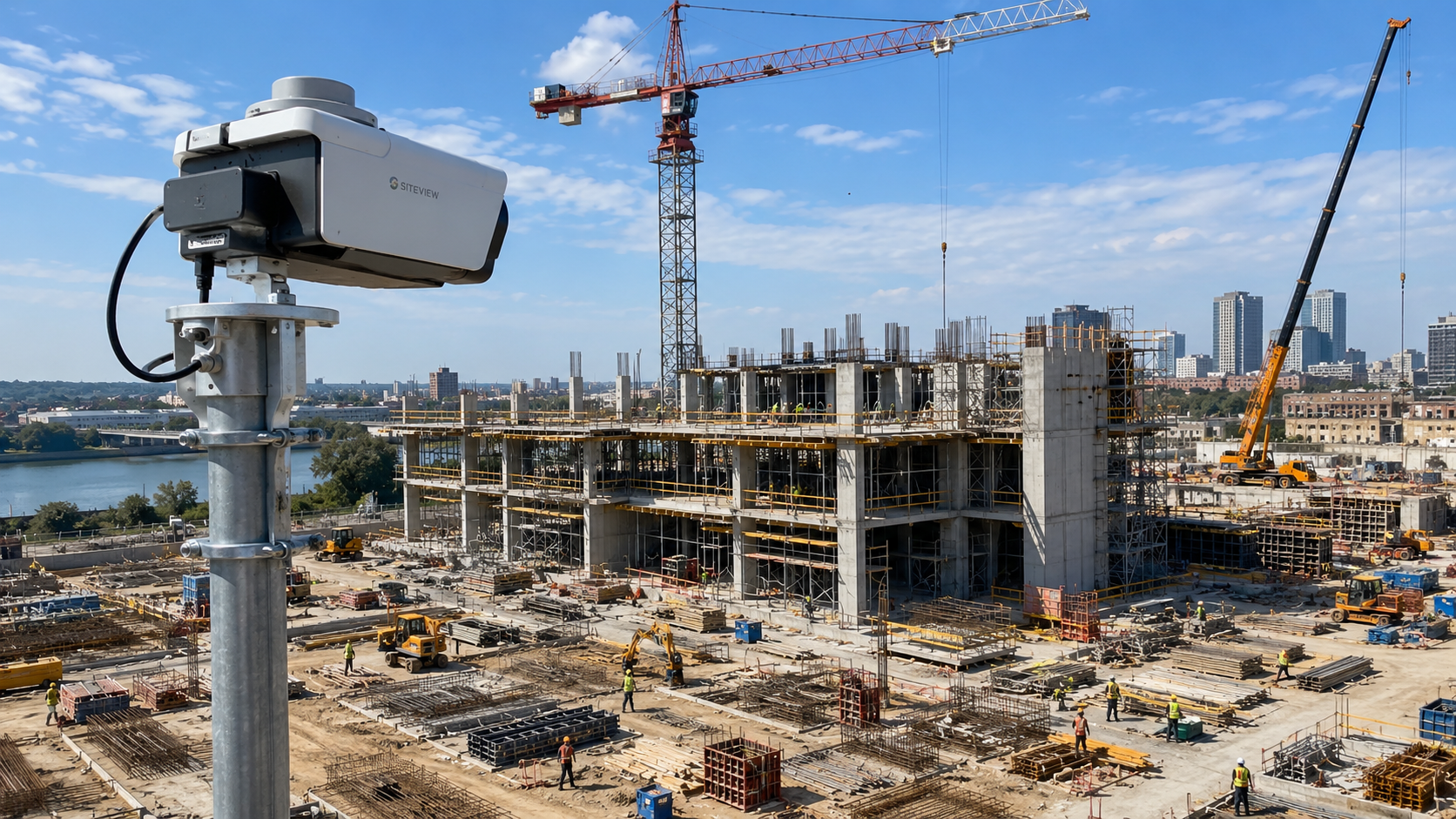
A fixed site camera gives project teams a consistent view of the build over time. Because the camera is positioned in the same place, progress can be captured from a reliable viewpoint throughout the project.
This makes it easier to see what has changed from week to week or month to month.
For project teams, this can support:
remote project visibility
regular progress images
milestone records
stakeholder updates
internal reporting
visual comparison over time
For stakeholders, it helps make updates more tangible. Instead of only being told that work has moved forward, they can see the progress clearly.
If your project needs regular visual records and ongoing site visibility, construction site cameras for project progress monitoring can help capture progress images, stakeholder updates and long-term project documentation.
Better Communication for Clients and Directors
Clients and directors often need high-level visibility rather than detailed technical updates. They may not need to know every operational detail, but they do need confidence that the project is moving forward.
Visual progress monitoring helps provide that confidence.
A short set of progress images or a simple update clip can show:
how much of the structure is complete
what stage the project has reached
how the site has changed since the last update
whether visible milestones have been achieved
how different phases of the build are progressing
This is especially useful when the project is large, complex or spread across a long timeline.
Supporting Internal Project Reporting
Progress monitoring is not only useful for external stakeholders. It can also help internal teams.
Project managers, operations teams and construction teams can use visual records to support internal reporting and communication. A consistent visual timeline can make it easier to review progress, prepare updates and refer back to key stages of the project.
This can be particularly useful when managing multiple sites or when senior team members cannot visit every location regularly.
Visual documentation gives the team a clearer reference point.
Milestone Documentation
Every construction project has important stages. These might include groundworks, steel installation, roof completion, façade progress, fit-out stages, external works or final completion.
If those milestones are not captured properly, they can be hard to show later.
Construction progress monitoring helps record these stages as they happen. This can be useful for:
project records
stakeholder reporting
internal presentations
client updates
marketing content
final project summaries
A strong visual record is often easier to understand than a written timeline alone.
Turning Progress Into Useful Content
One of the biggest advantages of visual progress monitoring is that the captured footage can be used in different ways.
The same visual record can support:
still progress images
short update clips
monthly progress videos
stakeholder presentations
social media content
project completion films
This is where progress monitoring becomes more valuable than simple site visibility. The footage is not just being captured for reference. It can also be turned into useful content for communication, marketing and long-term documentation.
For construction companies, developers and project teams, this helps get more value from the same visual capture.
Construction Progress Monitoring vs Time-Lapse Video
Construction progress monitoring and time-lapse video are closely connected, but they are not always the same thing.
Progress monitoring is usually focused on ongoing visibility and regular project updates during the build.
Time-lapse video is usually focused on showing progress over time in a final edited format.
For many projects, the best approach is to use a managed camera setup that supports both.
During the project, the camera can help capture progress images and updates. At the end of the project, the footage can be used to create a final time-lapse video or project completion piece.
This gives teams value during the build and after completion.
Who Benefits From Construction Progress Monitoring?
Construction progress monitoring can be useful for many types of teams and projects.
It is particularly relevant for:
main contractors
developers
project managers
infrastructure teams
housing development teams
commercial construction teams
pharma and industrial project teams
marketing and communications teams
clients and directors who need regular updates
It is especially useful when projects are long-term, high-value, public-facing or difficult for stakeholders to visit regularly.
What Makes a Good Progress Monitoring Setup?
A useful progress monitoring setup is not just about putting a camera on site. The camera needs to be positioned properly, managed consistently and used with the final output in mind.
A good setup should consider:
the best camera position
what stage of the project should be captured
how long the camera will be needed
whether the site needs regular progress images
what stakeholders need to see
whether drone footage or ground footage should be added
whether the final output will include edited videos
The more carefully the setup is planned, the more useful the final visual record will be.
How Scaling Visual Supports Construction Progress Monitoring
Scaling Visual helps by capturing construction progress in a structured and useful way.
This can include managed site camera systems, regular progress images, drone footage, stakeholder update content and final project videos. The aim is to make project progress easier to communicate, while creating a stronger visual record of the build.
Rather than treating the camera as a standalone piece of equipment, the focus is on what the footage can do for the project.
That might mean supporting internal updates, helping clients see progress, creating content for marketing teams or producing a final time-lapse video once the project is complete.
Final Thoughts
Construction progress monitoring helps bridge the gap between what is happening on site and what stakeholders need to understand.
For contractors and project teams, it can make updates clearer, records stronger and communication easier. For clients and directors, it provides a more visible sense of progress without needing to be on site every week.
When done properly, progress monitoring is not just about capturing footage. It is about turning project activity into clear, useful visual communication.